Federal Investigators have released preliminary findings and citations for the toxic gas exposure at Woodland Pulp in Baileyville, Maine on January 27, 2026, which caused the deaths of Kasie Malcolm and Allen Hornberger. Kasie was a 20-year-old co-op student at UMaine who had recently started a spring-semester internship at the plant. Allen was a 26-year-old chemical engineer who had begun working at Woodland a few months earlier.
Chemical Safety Board's Preliminary Findings
The first report released contains the preliminary findings of the Chemical Safety Board (the "CSB"), which confirms that neither Kasie nor Allen was responsible for the toxic gas release, which also caused non-fatal injuries to ten other workers at the plant.
Berman & Simmons attorney Elizabeth Kayatta, who is one of the leading wrongful death lawyers in Maine, represents Kasie Malcolm’s mother and Allen Hornberger’s parents. Attorney Kayatta issued the following statement in response to the CSB’s preliminary report, which was shared with the families earlier this week:
“The Chemical Safety Board’s update is clear: neither Kasie nor Allen had anything to do with causing the toxic gas release. These two boys were casualties of a corporate culture that prioritized profits over people. Many questions still remain about the shocking disregard for safety that developed at Woodland Pulp while under the ownership of International Grand Investment Corporation.”
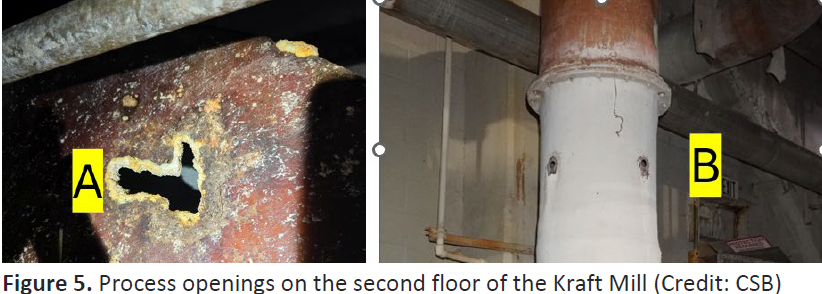
The CSB’s “Investigation Update” documents longstanding issues at the plant, including damage to the acid injection system, a lack of building ventilation at the Kraft Mill, and multiple holes in gas collection pipes and vents that had gone unrepaired for years since International Grand Investment Corporation purchased the mill in 2010.
The report describes that on January 27, 2026, operations were in the process of being shut down due to an increase in the price of natural gas. As part of the shut down, operators started draining equipment between 12:30 a.m. and 2:30 a.m. When process fluids drained into the process sewer pipe connecting the Bleach Plant to the Wastewater Treatment Plant, automated settings triggered the release of sulfuric acid around 4:00 a.m., which reacted with fluids in the pipe to form toxic hydrogen sulfide gas. Between 10:30 a.m. and 12 p.m., drain valves were opened on the first floor of the Kraft Building and the Bleach Plant's scrubber fan was shut down.
Toxic accumulations of hydrogen sulfide gas flowed out from the piping into the interior of the multi-story Kraft Mill. The area lacked any stationary hydrogen sulfide detectors or alarms, and workers had not been provided portable monitors to wear. Multiple workers on the first floor became symptomatic, at least one of whom lost consciousness.
It was not until hours later at approximately 6:15 p.m. later that Kasie and Allen were found collapsed on the Kraft Mill's second floor near damaged pipes that hydrogen sulfide gas had flowed out of:
Kasie and Allen had been working on project unrelated to the shutdown process that was happening on the first floor below them. There were no hydrogen sulfide alarms to alert them. There was no system in place controlling access to the plant during shutdown operations or accounting for personnel locations within the building.
The Chemical Safety Board's report states it is continuing to gather facts and analyze this issue of access control as well as "process safety practices, including operating procedures, identification and control of hazards, management of change, maintenance practices, and investigation of process incidents."
CSB Chairperson Steve Owens commented on the preliminary report: “Although our investigation is still ongoing, it already is clear that this terrible tragedy should never have happened. The two young employees who died were not provided with personal hydrogen sulfide monitors that would have alerted them to the presence of the toxic gas, and there were no hydrogen sulfide detectors installed in the building where the release occurred. The company also did not keep track of who was in the building and where they were during this horrible event. As a result, the two young employees were not found until hours after the release ended, leaving them exposed to the highly toxic gas without assistance.”
OSHA Issues Citations and Penalties to Woodland Pulp
The second recent development has been the release of official citations and penalties by the Occupational Safety and Health Administration (OSHA) against Woodland Pulp. The citations include the highest level of penalty that can be issued under federal law: "Willful-Serious" level violations. OSHA's press release notes that these four Willful-Serious citations were levied for failing to provide proper alarms or breathing devices and allowing overflow wood pulp to build up in storage areas.
OSHA also issued eight "Serious" level citations for lack of worker training on hydrogen peroxide risks; failure to conduct medical evaluations and fit tests for respirator users; and neglecting to label chlorine and acid lines, or control hydrogen sulfide exposure risks.
In total OSHA proposed $794,456 in total penalties, which would be paid to the US Treasury.
“Of the tens of thousands of investigations OSHA does each year nationwide, it typically issues only a few hundred willful serious-level violations,” Attorney Kayatta had to say about OSHA's penalties. “The fact that there were four issued out of this single incident—that’s very significant here.”
Attorney Kayatta notes that multiple other state and federal investigations are ongoing, including investigations by the EPA and the state DEP. In upcoming weeks, more information is expected to be made available for public release. Attorney Kayatta added, "Once the rest of the governmental investigations have concluded and their full findings are released, the families will be in a position to make an informed decision about how best to pursue justice for these young men."
Allen and Kasie's families ask that members of the press respect their privacy and direct any inquiries to Attorney Kayatta's office at Berman & Simmons.